


The United Kingdom has told the United Nations that it will not transfer sovereignty over any of its overseas territories against the wishes of their people.
The message came as it contends with a legal challenge from Argentina over Falklands oil and pressure from the British Virgin Islands (BVI) for greater self-government.
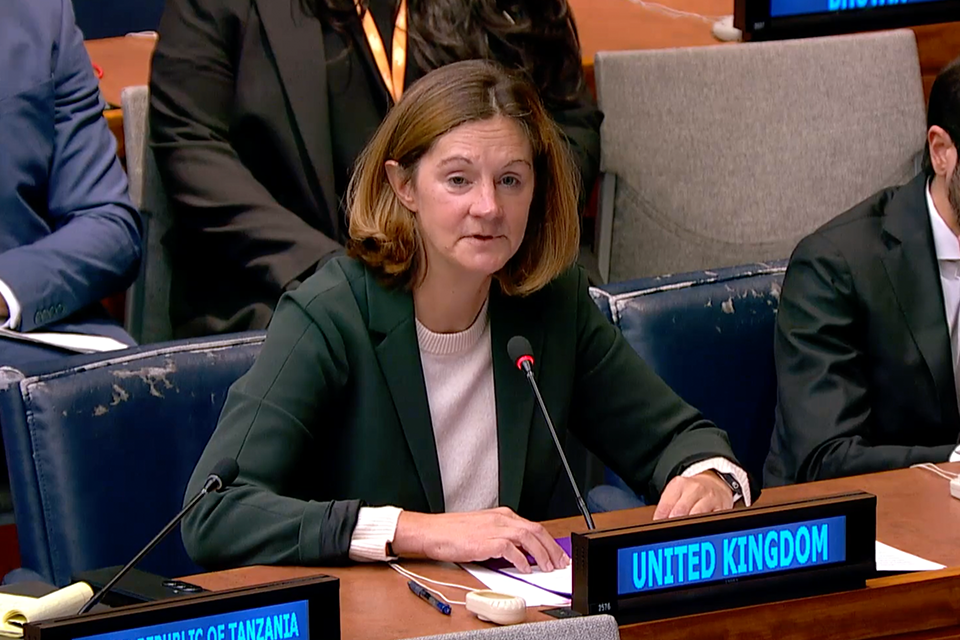
Addressing the UN’s Special Political and Decolonisation Committee in New York on 12 October, the UK government’s envoy set out London’s position on Gibraltar, the Falklands and the BVI, and restated the terms of its relationship with the territories.
“The United Kingdom overseas territories are self-governing, subject only to the UK retaining powers to carry out its obligations under international law,” Ambassador Kate Foster, deputy permanent representative to the UN, told the UN Fourth Committee.
“Indeed, we consider the territories to be a core part of the UK ‘homeland’ when it comes to our defence and security responsibilities.”
Falklands oil challenge
Argentina opened arbitration under Annex VII of the Law of the Sea convention by notifying the UK on 28 September, targeting Sea Lion, a Falklands oil project majority-owned by Navitas Petroleum.
On 13 October, it asked the International Tribunal for the Law of the Sea in Hamburg to halt the project.
“Argentina’s decision to initiate arbitration against the United Kingdom under the United Nations Convention on the Law of the Sea (UNCLOS) is the latest attempt to undermine the rights and livelihoods of the people of the Falkland Islands,” Foster said.
She also told the committee that hydrocarbon activity on the islands’ continental shelf is regulated under Falklands law and complies with UNCLOS.
“The people of the Falkland Islands have freely and democratically chosen their future, and they have every right to develop and manage their natural resources without intimidation, coercion, or interference from others,” she said.
The wording matched a statement issued on 30 September by Uma Kumaran, the overseas territories minister, which also said such behaviour raises questions about Argentina’s reliability as a partner for the UK.
“The United Kingdom will continue to stand shoulder-to-shoulder with the Falkland Islands Government and the Falkland Islanders,” she added.
“We will robustly defend their wishes, their economy and their right to determine their own future.”
BVI talks and the Gibraltar treaty
On the BVI, Foster responded to an address earlier in the session by Virgin Islands premier Natalio Wheatley, who outlined proposals from the territory’s constitutional negotiations with Britain.
These included the premier chairing Cabinet and the elected government leading the public service, practices already found in Bermuda and Gibraltar.
London’s position, Foster said, is unchanged.
“Where it is the clear and constitutionally expressed will of the British Virgin Islanders to pursue independence, the United Kingdom government will meet its obligations to help the territory achieve it,” she stated.
The review comes after the 2021 Commission of Inquiry, which highlighted governance weaknesses in the BVI.
A draft resolution on the territory, unanimously adopted by the UN Special Committee on Decolonisation, now advances to the Fourth Committee for a vote.
Gibraltar offered a more settled picture.
The treaty signed in Brussels on 14 July removes passport checks at the land border and covers the about 15,500 frontier workers who cross between Gibraltar and Spain every day.
Foster said the agreement left the sovereignty positions of Britain and Spain unchanged.
“But it also reflects a new era of cooperation, trust, and respect between the United Kingdom, the European Union, Spain and Gibraltar,” she added.
Foster ended her statement by saying “the United Kingdom remains committed to respecting and defending the right of the people of each territory to determine their own future, in line with the UN Charter.”
