


Coral cover on Little Cayman dropped to its lowest on record following a devastating global bleaching event, according to a new report.
The Healthy Reefs Report, by the Central Caribbean Marine Institute (CCMI), says its 2023 coral survey showed there was 27.3% coral cover on Little Cayman.
This was its highest since monitoring began in 1999.
The survey was carried out shortly before the world started experiencing a bleaching event that continues to this day and has affected 77% of the planet’s reefs.
According to the latest report, when CCMI carried out its annual coral survey last year it found coral cover had fallen to 10%, the lowest recorded since 1999.
The previous low since records began was 15% in 2005.
Coral bleaching happens when the ocean temperature rises and the coral expels the tiny plant algae that lives inside it and produces about 90% of the food the coral needs to grow.
This turns the coral white and with its main source of food gone, leaves it vulnerable to death.
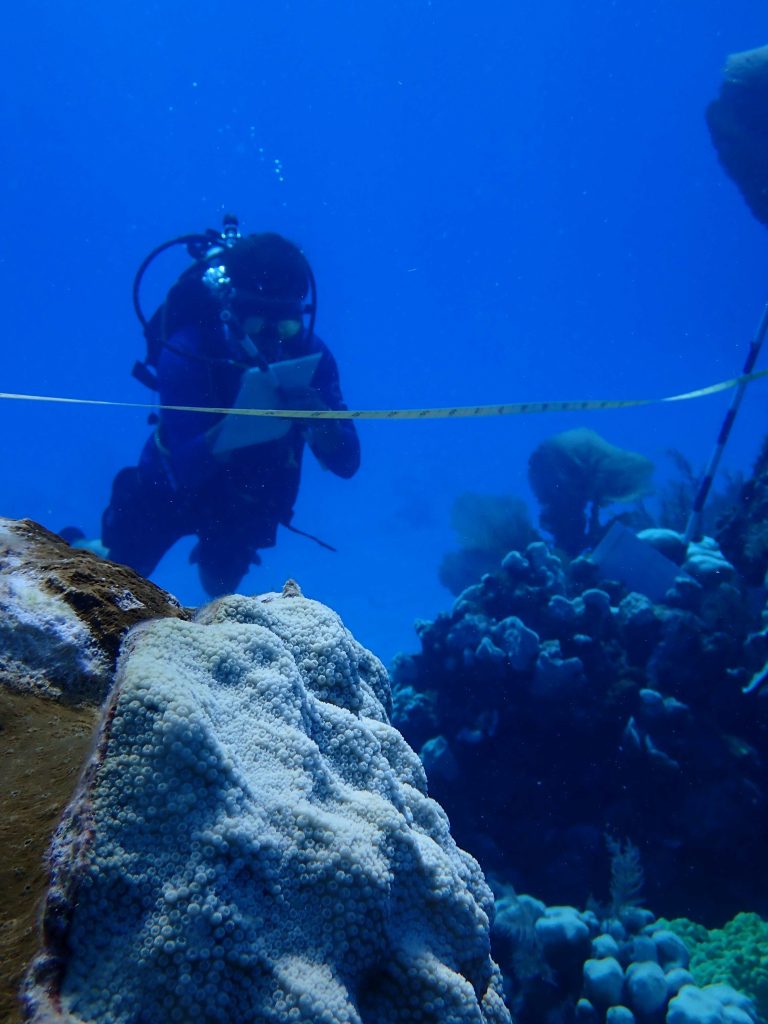
The report notes that much of the coral that has died on Little Cayman is coral known as ‘weedy coral’, which typically has a lower thermal tolerance.
In more positive news, the report says fish communities remained healthy in 2024 and there was even a “significant increase” in fish density (number of fish per survey) between 2023 and 2024.
In the herbivore category, parrotfish showed the biggest change in density, while groupers showed the biggest rise among carnivore fish.
The report said that the bleaching event has increased the presence of macroalgae, which could be causing the rise in herbivore fish that feed on algae. The fish, in turn, can help keep the level of algae under control.
In a press release this week, Abbie Dosell, head of fundraising and engagement at CCMI described the coral findings as “shocking” but added that there was hope.
She said that the key reef-building boulder corals on Little Cayman had showed a much higher rate of recovery post bleaching than the ‘weedy’ corals, with lower mortality.
In addition, she said CCMI researchers have been working to reverse damage done to the organisation’s coral nursery, which was badly damaged by the bleaching event.
“Over the past year, the nursery has been re-stocked from 17 fragments to nearly 220. Each fragment is a highly resilient genotype (or genetic variant) that was able to withstand and survive the 20+ weeks of elevated water temperature in summer 2023.
“These resilient corals have also recently survived and recovered from an outbreak of coral disease and continue to grow at a rate of nearly 1cm per month. These corals continue to contribute to the marine biodiversity of Little Cayman through annual spawning, increasing the wild population of genetically resilient corals and contributing to overall reef recovery.”
She said the next few years will be critical for Little Cayman’s coral reefs, but the protection that’s in place, its remote location and overall healthy supporting ecosystem “may just give these historically resilient reefs an edge to recover and persist through the ever-pressing threats of climate change’.
CCMI is a non-profit organisation that conducts and facilitates research, education and outreach with the aim of sustaining marine diversity for future generations.
