


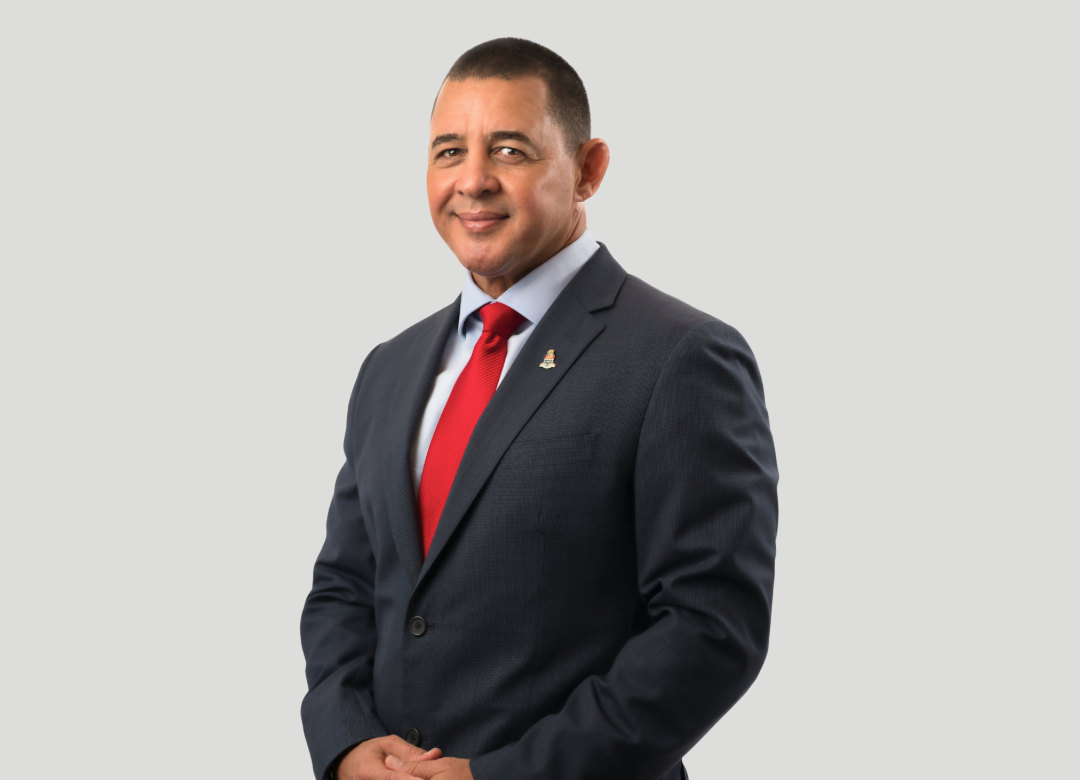
Opposition leader Joseph Hew has called for urgent action amid “emerging signs of economic slowing” in the Cayman Islands.
Weaker trade figures, a larger financial assistance budget and plans to draw on a new borrowing facility are warning signs the government should not ignore, he said.
However, the answer is not “panic or indiscriminate stimulus” but targeted action, Hew told Cayman Independent in written comments.
The MP called on the government to monitor household consumption, business investment, and to accelerate funded infrastructure and affordable housing projects.
He also urged it to avoid unnecessary fees that increase costs for households and businesses, while ensuring borrowing is directed at productive capital projects rather than masking structural spending pressures.
“My concern is that there are emerging signs of economic slowing which, taken together with the pressures already being experienced by households and businesses, should not be ignored,” he said.
Trade figures
Hew pointed to the Economics and Statistics Office’s (ESO) recent trade statistics.
Merchandise imports totalled CI$903.36 million in the first six months of 2026, down 1.0% from $912.14m a year earlier, according to the ESO’s April to June bulletin.
Non-petroleum imports fell 4.1% to $773.37m. Within that, imports of capital goods (excluding transport equipment) and parts fell 15.3% to $97.99m and consumer goods fell 5.1% to $205.36m.
Hew said declining capital goods imports can indicate weaker investment, while softer consumer goods imports “can warrant closer examination of household demand”.
“I therefore believe government should be paying close attention to these trends rather than relying solely on headline revenue or GDP figures,” he wrote.
The ESO figures are mixed across the two quarters.
Imports fell 8.6% to $436.47m in the first quarter, then rose 7.5% to $466.88m in the second, driven by a 38.0% increase in petroleum-related imports and a 3.1% increase in non-petroleum imports.
Consumer goods imports rose 6.7% in the second quarter after a 15.8% fall in the first. Capital goods and parts fell 7.6% in the second quarter after a 22.3% fall in the first.
Household pressure and borrowing
Hew underscored increased government spending on financial assistance as another economic warning sign and an indicator of “pressure at the household level”.
The originally budgeted $24m for this area was increased to $37m during the October sitting of Finance Committee.
He also pointed to “substantial additional appropriations” for healthcare for people who are uninsured, underinsured or have exhausted their insurance cover.
The opposition leader said he is particularly concerned that the government continues to need supplementary appropriations while preparing to access a $236m borrowing facility.
Hew acknowledged that parliament approved the borrowing authority in the 2026-27 budget for the capital programme.
His questions, he said, are why the government has now determined the borrowing is required, how much will be drawn, at what cost, and what productive assets Caymanians will receive.
Regarding employment, he said the situation requires some nuance.
The ESO’s fall 2025 labour survey put overall unemployment at 2.6% and Caymanian unemployment at 4.1%.
Overall unemployment rose from 2.4% a year earlier, while Caymanian unemployment fell from 4.6%.
“Those figures do not suggest a recessionary labour market,” he said.
“However, the ESO has separately identified concerns about Caymanian unemployment becoming more structural in nature, and that is something I believe deserves considerably more attention.”
Beyond the headline indicators
Hew said it would not be accurate to state categorically that Cayman is in recession at this stage.
His concern, he said, is “less about applying a technical label today and more about asking whether we are recognising the warning signs early enough”.
He said Cayman can have positive GDP growth, strong government revenues and low overall unemployment while many Caymanian families are still struggling with housing, groceries, electricity, insurance and healthcare.
He pointed out that Cayman’s economy is exposed to global pressures, like international fuel prices, freight costs, interest rates, geopolitical instability and changes in the major economies that tourism and financial services depend on.
“But that does not mean every domestic pressure can simply be attributed to global conditions,” he said.
“We also have extremely high housing costs, high insurance and utility costs, congestion and infrastructure constraints, and Government fees and charges which ultimately feed through into the cost of doing business and the cost of living.”
During periods of strong revenue, he encouraged the government to prepare by maintaining reserves, controlling recurrent spending, investing in productive infrastructure, addressing energy costs and increasing housing supply.
On what the government should do now, Hew said he does not believe the answer is panic or indiscriminate stimulus.
He said the government should closely watch the indicators he cited, speed up projects that are already funded, avoid unnecessary new fees, and make sure borrowing is directed to productive capital projects.
“The more important question is whether economic conditions are weakening, whether Caymanian households are becoming more vulnerable, and whether Government is acting early enough to protect them if conditions deteriorate further,” he said.
Cayman Independent reached out to finance minister Rolston Anglin for comment on the ESO report and Hew’s economic assessment. He had not responded by publication time.
