


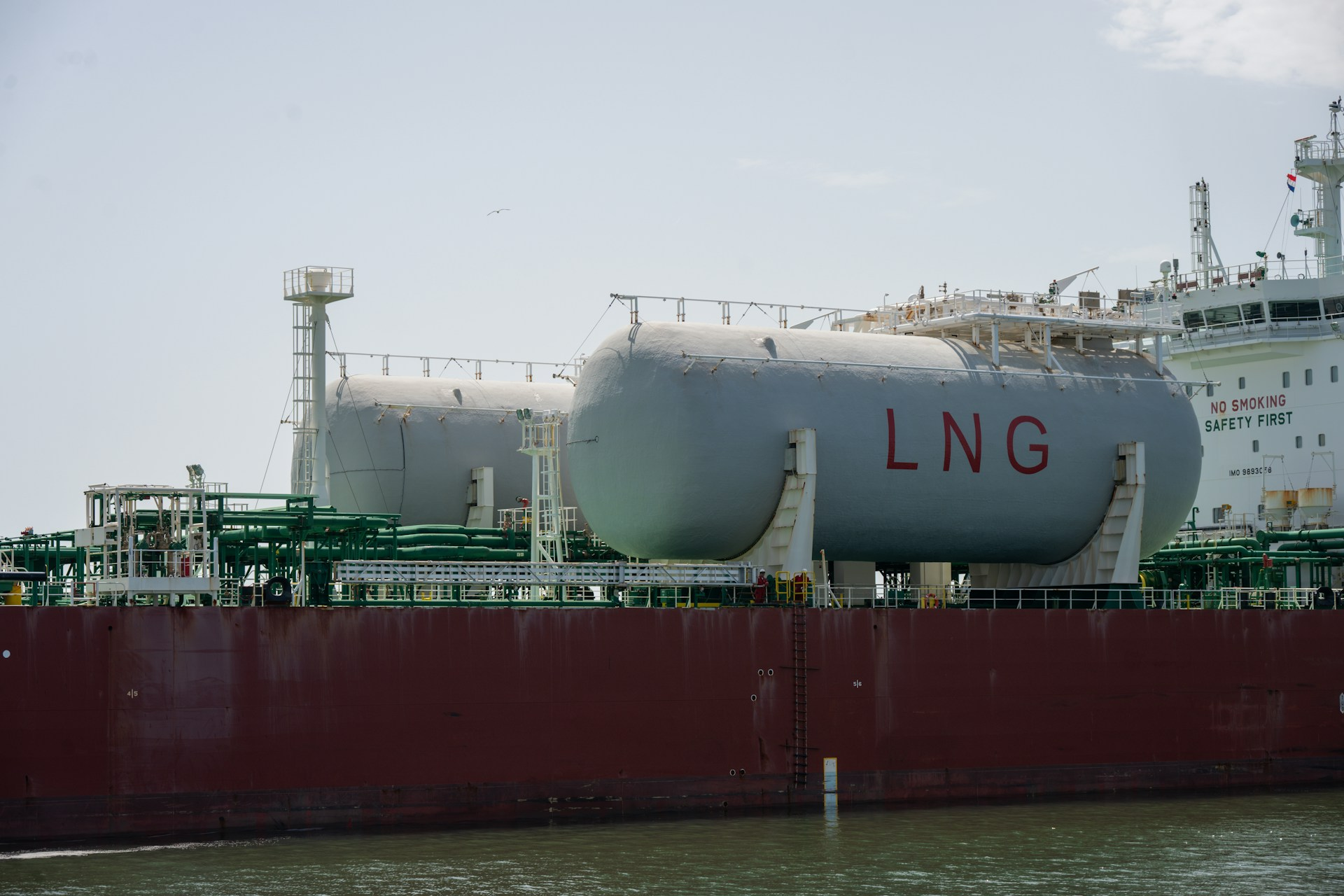
Caribbean Utilities Company (CUC) has said liquefied natural gas (LNG) appears to be a viable “transition fuel” for Grand Cayman and could generate electricity at a lower cost than diesel.
However, it added that large-scale solar and battery storage “remain central” to its move to cleaner energy and the use of LNG “would not replace or slow” its renewable transition.
In a written response to questions from Cayman Independent, CUC said: “The LNG supply chains that CUC has investigated are scalable and therefore could be reduced or increased as needed with proper planning.”
This could help to “support the integration of more renewable energy while ensuring customers continue to receive the reliable and affordable electricity they depend on,” the company said.
The response follows comments from Premier André Ebanks about considering LNG as an alternative to diesel, amid slow progress in solar development.
Speaking at the Chamber of Commerce luncheon on 15 October, Ebanks said economic development minister Rolston Anglin had been asked to analyse alternatives to diesel, including LNG.
Ebanks also referred to exploration of LNG during a September appearance on Radio Cayman.
“If it’s going to be too slow and you can’t do it 100% with solar, do we need to look at LNG as a transitional fuel?” Ebanks said at the chamber luncheon.
“Those of us who are 100% solar, including myself, have to think how we’re going to get this done because this problem cannot go on another political term.”
He said the government would receive a report with a timeline “to assess our options to see what can be done in the next 18 to 20 months”.
Meanwhile, CUC cited a timeline of 12 to 18 months regarding the assessment of additional LNG infrastructure needs.
CUC said this process will need to be completed before any final commitments are made or any proposed solutions are presented to the regulator or government for consideration.
“Based on the work completed to date, LNG appears to be a viable transition fuel option for Grand Cayman,” the company said.
“Further infrastructure would be needed to receive, store, re-gasify and deliver LNG to CUC’s generating facilities.
“Over the next 12 to 18 months, CUC will undertake additional engineering and commercial work to more accurately define the infrastructure requirements, assess the total costs and benefits and develop the commercial framework with the preferred bidder.”
Despite the need for further infrastructure, the energy provider estimated the cost of LNG electricity generation would be “far less” than the cost of diesel fuel.
CUC said preliminary estimates put the current cost of diesel at approximately CI$0.25 per kilowatt hour, compared with an estimated $0.12 per kWh for LNG.
It said LNG also has a lower emissions profile than diesel and may offer greater fuel-cost stability over time.
It added that the estimates remain subject to further engineering, commercial analysis and validation.
Existing generating capacity and solar
CUC said it upgraded five generating units in 2025, representing 64 megawatts of capacity, to bring its engines to their “most modern specifications” and allow “easier modification for a dual fuel operation once LNG is available”.
It said further upgrades to those units and associated facilities would be needed. A further 40 MW of existing capacity can also be converted to dual fuel, it added, meaning more than 100 MW could run on LNG.
CUC described the development of LNG capacity as a complement to its solar and battery storage plans.
“As more renewable energy is added to the grid, generation available to generate electricity 24 hours a day even on a rainy day will still be needed to maintain a reliable electricity supply, particularly during periods when renewable energy is not available or sufficient to meet demand,” CUC wrote.
“LNG could provide that support with a lower emissions profile than diesel, while also offering the potential for lower and more stable fuel costs for customers.”
Asked what has delayed the solar transition, CUC cited interdependent steps including procurement, regulatory approvals and integration into the electricity system.
It did not name any specific delay. It said it remains committed to making renewables the primary energy resource for Grand Cayman.
Cayman Independent contacted the Office of the Premier for further comment but had not received a response by press time.
