


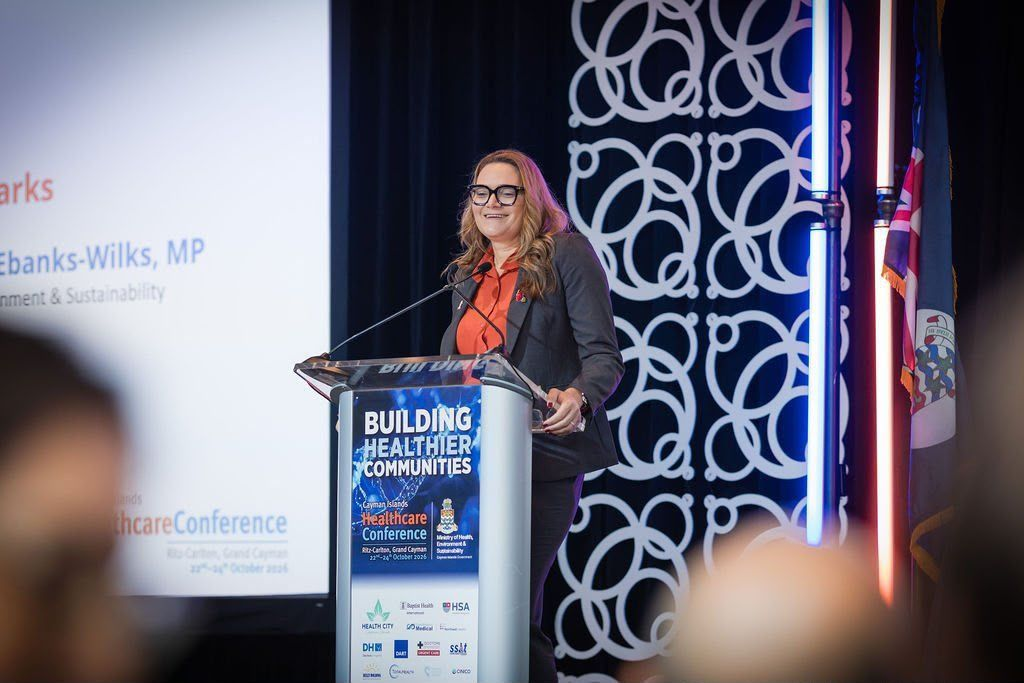
The 17th annual Cayman Islands Healthcare Conference brought together local and international professionals to discuss ways to improve healthcare and build healthier communities.
About 900 people attended the conference, organised by the Ministry of Health, Environment and Sustainability, which ran from 22 to 24 October.
This year’s theme was, ‘Building healthier communities: Advancing personalised, preventive, predictive and participatory care’.
The programme opened with a private dinner for speakers and sponsors, followed by two days of sessions at The Ritz-Carlton, Grand Cayman.
It covered a range of topics, including vaccination, precision medicine, patient safety, adolescent health, mental health, artificial intelligence, stroke care and sustainable healthcare.
According to a ministry press release, the event featured more than twice the number of speakers and presentations compared with previous years, with local and international companies also showcasing healthcare services and technology.
Health minister Katherine Ebanks-Wilks said the conference provided an opportunity for healthcare professionals, policymakers and community organisations to share knowledge and explore how new ideas could translate into practical improvements.
“Building a healthier Cayman Islands requires all of us to work together,” she said.
“This conference gave us the opportunity to share knowledge, strengthen relationships and consider how we turn new ideas into real benefits for the people we serve.
“The real test of this conference will not be the quality of our discussions alone, but what changes as a result of them.”
In her closing remarks, Ebanks-Wilks emphasised the importance of coordination across the healthcare system, comparing it to an orchestra in which different contributions combine to achieve a common goal.
She said patients often relied on the work of multiple professionals and organisations, making communication, shared information and coordination essential to effective care.
Early delegate feedback was also positive, according to the ministry.
Of the 314 people who had completed the post-conference survey, representing about 35% of attendees, 95.9% said they would consider attending a future conference, while 94.3% were satisfied or very satisfied with the presentation content.
A further 90.6% agreed the event was well organised.
The ministry said the figures were preliminary and could change as more responses are received.
This year’s event also introduced several digital improvements, including online registration, a dedicated conference app, on-site badge printing and QR-code scanning to track attendance at eligible Continuing Medical Education (CME) sessions.
An on-demand learning option is also being developed to allow people who did not attend to earn eligible CME credits. Further details will be announced once arrangements are finalised.
Exie Tomlinson-Panton, deputy chief officer in the ministry and chair of the organising committee, said the changes were intended to improve the delegate experience while building on the work of previous conference organisers.
The ministry said it will use feedback from this year’s event to help shape the 2027 conference.
